Unlimited eSIM
Japan

AU
Duration
4 Days
Plan
Data
Speed
4G / 5G
Price
US$13.00
More Info
Best Value

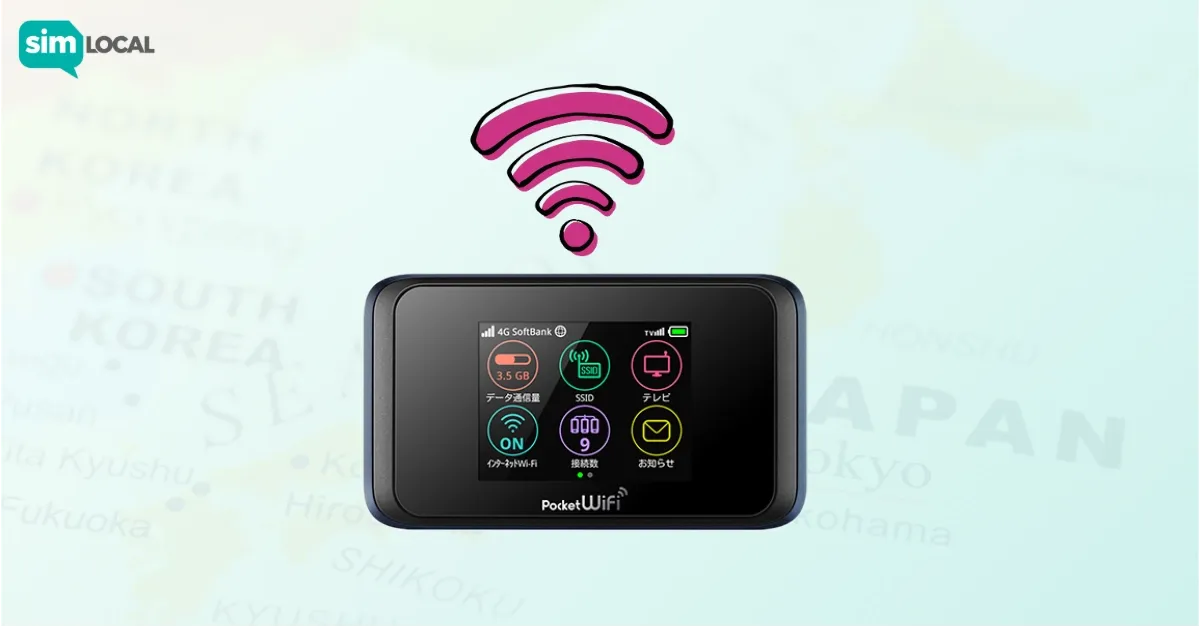
If you're comparing ways to stay connected in Japan, pocket wifi is probably one of the options on your list, it's been the default recommendation for years. Here's how it actually works, what it really costs, the catch most providers don't lead with, and how it stacks up against a Japan eSIM.
Pocket wifi is a small portable router you rent for the length of your trip. It connects to Japan's mobile networks and creates its own wifi hotspot that your phone, laptop, tablet or camera can join, typically up to 5-10 devices at once, depending on the router. You order it online before you fly, collect it (or have it delivered), carry it with you, and return it before you leave the country.
Daily rates generally run from about ¥231 to ¥900 depending on the provider and plan, with genuinely unlimited high-speed plans sitting at the higher end. A few real examples: Ninja WiFi's unlimited plan starts from around ¥440/day, while Sakura Mobile was charging around ¥563/day as of late 2025.
On top of the daily rate, most providers take a refundable deposit, Japan Wireless charges ¥5,000, Ninja WiFi around ¥8,000, and Sakura Mobile around ¥10,000, refunded once the device comes back undamaged. Optional device insurance, if you want it, typically adds another ¥200-600 a day.
This is the part most pocket wifi listings bury in the fine print. Most "unlimited" pocket wifi plans in Japan carry a Fair Usage Policy that throttles your speed hard, often down to a crawl, once you pass a daily high-speed threshold, sometimes as low as 1-2GB. Hit that limit navigating and posting a few photos in the morning, and you can be stuck on barely-usable speeds for the rest of the day until it resets at midnight Japan time.
Some providers do better: Sakura Mobile, for example, guarantees 10GB of high-speed data every day before any throttling kicks in, but that's usually reflected in a higher price tier. It's worth checking a provider's actual daily high-speed allowance, not just the word "unlimited," before you commit.
Losing or damaging the device generally means forfeiting some or all of your deposit, sometimes with an additional fee on top, worth checking the exact replacement cost before you rent, especially if you're not used to keeping track of an extra piece of hardware on top of your phone.
Both work. The honest answer depends on your group size and devices, not just price.
Pocket wifi still makes sense if you're travelling with a laptop, camera or older phone that doesn't support eSIM, or if you're a larger group who'd rather split the cost of one device than buy separate data for everyone.
For most solo travellers, couples, and small groups with modern phones, an eSIM wins on almost every practical point: nothing extra to carry, charge or return, no deposit sitting on your card, no risk of a damage or loss fee, and no time lost at a pickup counter when you land or a return box when you leave. Each traveller in a group also gets their own independent connection instead of everyone being tied to one router's battery and signal range, no dropping off the shared connection because whoever's carrying the router stepped into a shop.
On the fair-use point specifically, it's a fairer fight than it looks: Sim Local's own Japan eSIM plans include 10GB of high-speed data a day on the unlimited tier, matching Sakura Mobile's premium allowance, usually at a lower price, and with hotspot tethering included, so you can still share your connection with a laptop or camera if you need to. See the real numbers in our guide to the best eSIM for Japan.
Sim Local's Japan eSIM plans run on AU by KDDI, one of Japan's largest and most reliable networks. It covers around 99% of the country's populated area with strong 4G/5G speeds, from central Tokyo and Osaka out to the rural stops most pocket wifi providers barely mention.
That's the network behind the plans below: unlimited data, hotspot tethering included, no router to charge, no deposit sitting on your card, and no fair-use catch buried in the fine print.
Prices in USD, correct at time of writing, check our current plans for current pricing. All plans are data-only and support hotspot tethering.
Browse the full range of AU by KDDI eSIM plans for Japan to find the one that fits your trip.
Daily rates typically range from about ¥231 to ¥900 depending on the provider and plan, plus a refundable deposit of ¥5,000-10,000. Genuinely high-allowance unlimited plans sit toward the top of that range.
Yes, in most areas, pocket wifi devices run on Japan's major mobile networks, which cover the country broadly. Coverage can thin out in remote mountainous or rural areas, same as it would for a phone on the same network.
Typically 5-10 devices at once, depending on the specific router model, useful for a family or group sharing one connection, though everyone's speed is shared across however many devices are connected.
Often, yes, even on plans marketed as "unlimited." Most carry a Fair Usage Policy that throttles speed hard after a daily high-speed threshold, sometimes as low as 1-2GB, so it's worth checking the actual daily allowance rather than the word "unlimited" alone.
Contact your provider as soon as possible; most rental agreements include a replacement fee that's deducted from your deposit, sometimes with an additional charge if the cost exceeds it. Check the exact terms before you rent so there are no surprises at return.
.jpg) How to Stay Connected in Japan: WiFi vs. Roaming vs. eSIM
How to Stay Connected in Japan: WiFi vs. Roaming vs. eSIMIn this guide, we compare the three main options for staying connected in Japan: Public WiFi, International Roaming, SIM cards & eSIM.
Read More The Ultimate Guide to Solo Travel in Japan
Japan is one of the safest, easiest, and most rewarding countries to explore solo. From navigating transport to staying connected with an eSIM, here’s everything you need to know before you go.
Read More Is Japan Worth Visiting? Where to Go, What to Do & How Long to Stay
Wondering if you should visit Japan or not? This Japan travel guide will answer that question for you & includes all of the best Japan travel tips.
Read More